Business Transformation Keynote: Event Organiser's Guide
By Dominic Marc Short · 14 October 2026 · 15 min read

What if the most memorable moment of your transformation event isn’t the keynote, but the conversation it helps people have afterwards? Choosing a keynote speaker on business transformation means looking beyond an impressive profile. The speaker’s perspective needs to connect with your organisation’s priorities and the people who will live with the change.
It’s understandable to want a session that does more than lift the mood for an hour. Event organisers also need to compare speakers, formats and levels of content tailoring while keeping the event’s purpose firmly in view. No small feat, even before the coffee break.
This guide offers a practical way to assess relevance, audience fit and value. You’ll learn how to shape a transformation narrative that links business priorities with the human experience of change, and how to build a confident shortlist. It also explains the differences between keynotes, moderation and masterclasses, and how bespoke content can support your event brief. Dominic Marc Short - Independent Consultant brings experience across business travel management, meetings and events, and marketing, and has delivered more than 500 events worldwide in varied formats and contexts.
Key Takeaways
- A keynote can help people interpret organisational change and frame useful questions, but it doesn’t replace an implementation plan.
- Choose a keynote speaker on business transformation whose perspective connects strategic priorities with the realities employees face.
- Compare speakers by topic relevance, audience fit, practical perspective, format and how well the content can be tailored.
- A clear brief should set out the event’s purpose, audience, transformation context and the takeaway you want people to leave with.
- Dominic Short offers keynote speaking, moderation and masterclasses, with bespoke content shaped around the event brief.
Table of Contents
- What should a keynote speaker on business transformation help your audience understand?
- How can a business transformation keynote connect strategy, people and change?
- How do you compare keynote speakers on business transformation?
- How should you brief a keynote speaker on business transformation?
- Why consider Dominic Short for a business transformation keynote?
What should a keynote speaker on business transformation help your audience understand?
A business transformation keynote is a focused session that helps an audience make sense of organisational change: what is shifting, why it matters and how it connects with their work. A useful speaker does more than describe a bold future or showcase a new technology. They give people a coherent way to interpret the change taking place around them.
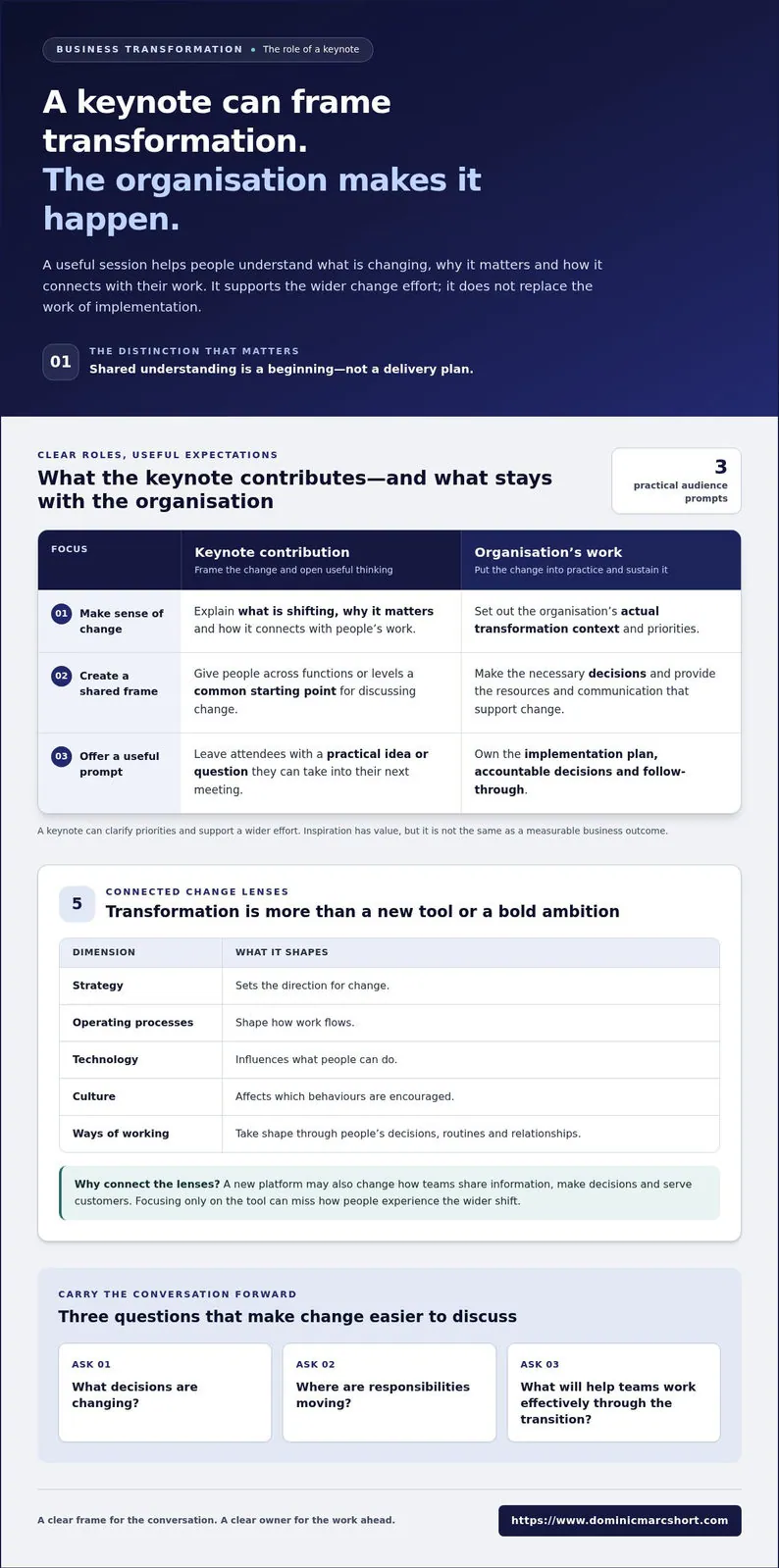
A business transformation keynote connects strategic change with the audience’s working context, so people can see what the shift means for the organisation and their role within it. That perspective can open a conversation, clarify priorities and give attendees a question or idea to carry into their next meeting. It supports the wider change effort, while implementation planning, accountable decisions and follow-through remain the organisation’s work.
Which business changes can shape the keynote brief?
Transformation may involve strategy, operating processes, technology, culture and ways of working, often in combination. Introducing a new platform, for example, may also change how teams share information, make decisions and serve customers. A keynote that focuses only on the tool risks missing the organisational shifts that shape how people experience it.
Start with the change your audience is living through, rather than a fashionable label. The brief might centre on a revised operating model, changing customer expectations, new ways of collaborating or the cultural implications of strategic growth. A foundational overview of business transformation can help establish the broader concept, but the event brief should bring it back to your organisation’s priorities.
Several changes may be connected, and the session can acknowledge those links without trying to resolve them all. A clear scope helps the speaker explore meaningful tensions, such as how to improve consistency without losing local insight, or how to introduce new processes while keeping teams engaged.
What is a keynote meant to contribute?
A keynote can establish a shared frame for the event. It gives people from different functions or levels a common starting point for discussing change, especially when strategy language feels abstract or familiar only to senior leaders. The session might translate “operating model transformation” into questions attendees can apply: what decisions are changing, where are responsibilities moving, and what will help teams work effectively through the transition?
Judge its contribution by the relevance of the perspective and the quality of the ideas it gives the audience. A thoughtful keynote can:
- Make a complex change easier to explain and discuss.
- Offer a fresh perspective on familiar organisational challenges.
- Give attendees a practical idea or question to take back to work.
Inspiration has value, but it is not the same as a measurable business outcome. Results also depend on the organisation’s decisions, resources, communication and follow-through. Set the keynote’s role clearly, and it can be a strong opening for useful thinking rather than a substitute for the work ahead.
How can a business transformation keynote connect strategy, people and change?
A transformation narrative becomes relevant when it links the organisation’s ambition with the decisions and working practices that will bring it to life. Strategy may set a direction, but processes shape how work flows, technology influences what people can do, and culture affects which behaviours are encouraged. These elements interact: a new system may require revised responsibilities, clearer communication and different habits across teams.
People-centred context matters because a strategy is enacted through the decisions, routines and relationships of the people expected to carry it out. A keynote speaker on business transformation can make those connections visible and give attendees a useful lens for considering their own role in the change.
Building a transformation narrative that feels relevant
Begin with a change the audience recognises, then connect it to a clear organisational priority. If the organisation is revising how it serves customers, for instance, a speaker might explore how that ambition could affect team handovers, decision-making and the information employees need. These are practical prompts for discussion, not claims about a particular organisation. They help translate broad language into questions leaders and teams can consider in their own context.
A focused narrative doesn’t need to simplify every complexity. It can acknowledge that different teams experience the same change differently, then give the audience a useful way to consider shared priorities, practical implications and areas that need further discussion.
Connecting digital change with organisational change
Technology can enable new capabilities, but choosing a tool is only one part of transformation. Processes may need to change around it; people need to understand how it fits their work; and communication can clarify what is changing and why. McKinsey’s Understanding Digital Transformation provides context on the role of technology in organisational change. For a travel-related example, a new booking platform might also prompt questions about approval workflows, data use and how employees receive guidance. The platform alone doesn’t answer them.
For event organisers, this creates a practical test for the keynote theme: does it connect the digital initiative to the wider operating context, or treat implementation as a matter of switching on a tool? Further context on digital transformation for business travel can help frame the strategic and operational dimensions. Meanwhile, strategic change management for corporate travel relates to the people and adoption side of the shift.
- Strategy: What organisational priority is the change intended to support?
- Processes: Which routines, decisions or handovers may be affected?
- People: What do teams need to understand, practise or discuss?
- Technology: How does the tool enable the change, rather than stand in for it?
These questions give a keynote a coherent thread while leaving detailed decisions and delivery with the organisation and its implementation work. To explore how a tailored speaking session could support your event’s transformation theme, view Dominic Short’s keynote speaking.
How do you compare keynote speakers on business transformation?
A polished profile can make almost any keynote sound compelling. The more useful question is whether the speaker’s perspective, style and session format serve your event’s purpose. Assess a keynote speaker on business transformation against the audience and the change they are there to discuss, not a generic ranking or a list of impressive phrases. Inspiration matters, but without a link to the audience’s working context, it can feel like a bright spark with nowhere to land.
Use the same criteria for each candidate. This makes differences easier to see and helps the organising team explain its choice with confidence.
Which speaker-fit criteria matter most?
Consider how the speaker’s experience relates to your transformation theme, then test that fit against your audience’s seniority, sector mix and familiarity with change. A leadership audience may need a strategic challenge; a cross-functional group may benefit more from a shared language for discussing change. Finally, match the format to the purpose: a keynote sets a central perspective, moderation guides discussion, and a masterclass creates space for focused learning.
How can organisers assess practical value?
Look beyond broad promises and ask whether the proposed session speaks to questions your audience is likely to recognise. If the event concerns a new operating model, for example, does the outline address how decision-making or collaboration may change? The speaker need not provide a complete answer to every issue. A relevant question, well-chosen example or fresh perspective can be more useful than a sweeping promise.
Assess tailoring by comparing the proposed theme with your brief. Does it reflect the event’s priorities, or could the same description appear unchanged on any conference programme? A profile, sample outline or conversation about the session can show how the content will connect with your audience. Popularity and polished delivery may signal visibility or presentation skill, but neither proves relevance on its own.
Be wary of claims that a single keynote will guarantee business results. Outcomes depend on wider organisational choices and follow-through, not one session. Choose the speaker whose approach best fits your event objectives and audience needs. The strongest shortlist is not necessarily the most famous; it’s the one with a clear, credible reason to believe the session will matter in the room.
How should you brief a keynote speaker on business transformation?
A useful brief gives a speaker enough context to make the session specific, without scripting every point or answer. Start by setting the event’s purpose and place the keynote within the wider programme. Strong strategic corporate event management connects each session to the audience and the event’s objectives, rather than treating a keynote as a standalone item on the schedule.
Work through the brief in sequence:
- Define the event purpose. State why the event is taking place and what organisational priority it supports. Is the session intended to introduce a new direction, bring teams together around a change, or prompt discussion about how it will affect their work?
- Describe the audience. Explain who will attend, their roles and how familiar they are with the transformation. Note relevant differences, such as a mix of senior decision-makers and employees who will use new processes day to day.
- Set out the change context. Summarise what is changing, why it matters and what the audience already knows. Include relevant sensitivities or terminology so the speaker can avoid assumptions and use clear, appropriate language.
- Name the desired takeaway. Share the key question you want attendees to consider after the session. “What will help us make decisions consistently during this transition?” gives the speaker a useful focus without dictating the conclusion.
- Explain programme and format. Describe where the session sits in the event, its tone and the time available. Clarify whether the purpose calls for a keynote, moderated dialogue or a masterclass, and mention any surrounding sessions that shape the context.
What to include in the event brief
Give the speaker practical background, not a filing cabinet’s worth of internal documents. A concise summary of the event, audience, transformation and desired takeaway is a strong starting point. Add context that could materially affect the session, such as whether the audience is hearing about the change for the first time or has already been working through it.
Then leave room for the speaker’s perspective. The brief should establish boundaries, priorities and relevant facts, while allowing the speaker to shape a coherent narrative and choose an effective way to engage the audience.
How to align content and format
Choose the format by the job the session needs to do. A keynote can give the event a shared theme; moderation can help a panel or conversation explore different views; a masterclass can support focused learning. Bespoke content can be shaped around the brief and audience, connecting the theme to the programme rather than delivering a generic talk with the event name added at the top.
Keep the requested outcome realistic. A session can contribute perspective, prompt discussion or give attendees a useful idea to carry forward. Organisational change depends on decisions and action beyond the stage. A clear brief helps the speaker make their contribution count.
Why consider Dominic Short for a business transformation keynote?
A transformation event needs a speaker who can connect the subject with the people in the room and the purpose of the gathering. Dominic Short brings more than 30 years of experience across business travel management, meetings and events, and marketing. That breadth offers useful context for organisers balancing a complex business theme with audience expectations and the shape of the event.
Dominic has delivered more than 500 events worldwide in varied formats and contexts. That experience spans event settings and audiences, while a keynote itself has a distinct role: offering a perspective to help people engage with a theme. Consulting, speaking and event delivery each serve different purposes, and organisers can choose the format that fits their objective.
A speaker with broad business and event experience
Business travel management connects to the practical realities of organisational processes and employee experience. Meetings and events bring a close understanding of how audiences engage with a programme, while marketing involves communicating ideas with clarity. Together, these fields provide a broad professional foundation for shaping a session around an event brief, without implying that one area replaces specialist knowledge of another.
For organisers, the value lies in applying that experience to the event’s priorities, the audience’s working context and the perspective they are being invited to consider. The aim is to make the subject approachable and relevant for the people attending, not to present a keynote as an implementation plan.
Choose a format that suits the event
Dominic works as a keynote speaker, moderator and masterclass teacher. These formats serve different needs:
- Keynote speaking gives the event a central theme or perspective for the audience to consider.
- Moderation guides a discussion, helping speakers and participants explore a topic together.
- A masterclass creates a focused learning format around a specific subject.
The right choice depends on what the session should contribute to the programme. If the aim is to establish a shared point of view, a keynote may fit. If the event needs to bring multiple perspectives into conversation, moderation may be more suitable. For a deeper exploration of a particular topic, organisers may prefer a masterclass. No need to make one format do every job on the agenda.
For corporate sessions, associations and educational institutions, bespoke content can be shaped around the organiser’s brief. That means aligning the subject and approach with the audience and event context, while leaving room for the speaker’s own perspective. A strong fit begins with a clear purpose and a realistic expectation of what the session can contribute.
Explore Dominic Short’s business transformation keynote and speaking services.
Give the next conversation a strong starting point
A keynote doesn’t need to carry the whole transformation. Treat it as one moment in a longer conversation: what should attendees be ready to discuss, decide or explore once they leave the room? Naming that next step before booking gives the speaker a meaningful destination and helps connect the session with what follows, whether that’s team dialogue, leadership discussion or further learning.
Here’s a useful final test for a keynote speaker on business transformation: can their contribution help the audience move from listening to thinking together, while recognising that progress depends on work beyond the event? A clear purpose creates room for an engaging session and a practical thread people can pick up afterwards. The plan needn’t be elaborate. A well-chosen question or conversation prompt can give the event momentum, without pretending change happens by applause alone.
Frequently Asked Questions
Can a business transformation keynote be tailored to our audience?
Yes. Share who will attend, what change is under way and the question you want people to consider. A keynote speaker on business transformation can use that context to shape examples, language and emphasis for the room, whether it includes senior leaders, operational teams or a mixture. Dominic Short provides bespoke content for corporate sessions, associations and educational institutions, helping organisers connect the session with their event brief without turning it into a project plan.
What is the difference between a business transformation keynote and a workshop?
A keynote usually gives a broad audience a common starting point, while a workshop or masterclass allows participants to explore a subject in more depth. For instance, a keynote might introduce questions about a change in customer service, followed by a smaller session where a team examines how those questions relate to its own work. Choose according to the intended interaction, available programme time and what participants need to do during the session.
How do you measure whether a transformation keynote was successful?
Decide in advance what the session should contribute, then assess it against that purpose. If the aim is to give attendees a shared language for discussing change, feedback can explore whether the central ideas were clear and useful. You might also ask participants which question they will take into team discussions. Positive reactions can indicate engagement, but they don’t establish long-term organisational impact, which depends on follow-through after the event.
How far in advance should we book a keynote speaker?
There isn’t one lead time that suits every event. Timing depends on the event date, programme arrangements and the preparation needed to shape the session. Starting early gives organisers and the speaker more room to clarify the event’s purpose, audience and format, then coordinate the keynote with the wider agenda. Share the date and any programme decisions already made at the outset, so planning can begin with useful context.
Can a keynote speaker also moderate a business event?
Yes, a speaker may also moderate, although the roles call for different preparation. A keynote is built around a prepared perspective; moderation requires attention to the speakers, questions and direction of a live discussion. If one person is taking both roles, make the programme transitions clear and allow time to shift between them. Dominic Short works as both a keynote speaker and moderator, giving organisers format options within their event planning.
What should we look for in a speaker’s transformation experience?
Look for a clear connection between the speaker’s experience, your event theme and the audience’s responsibilities. A useful profile should help you understand the perspective they bring, not rely only on broad claims or impressive wording. Consider whether the proposed session can address business context as well as technology, and whether its examples suit the people attending. Ask yourself: could this speaker make the subject meaningful to this particular audience?
Related articles

16 October 2026 · 14 min read
How to Choose a Keynote Speaker for an Event: A Practical Checklist
Discover how to choose a keynote speaker for an event with our handy checklist. Skip the guesswork and book a delightfully brilliant guest speaker today!

30 September 2026 · 12 min read
How to Measure Event ROI: A Practical Guide for 2026
Wondering how to measure event ROI without losing your cheer? Discover our jolly practical guide to tracking real returns, brilliant buzz, and bottom lines!

14 September 2026 · 13 min read
Sustainable Business Travel: 2026 Strategic Growth Guide
Ready for 2026? Our guide offers brilliant sustainable business travel solutions to delight your team, meet CSRD targets, and boost your bottom line. Sorted!